The Jazz Age in Silver: How Art Deco Reached Everyone
The 1920s handed jewellery a whole new language: sharp, geometric, electric with the speed of the machine age. The grandest pieces were platinum and diamond — but the look belonged to everyone, and it reached ordinary hands in silver.
A style born at a fair
The movement we now call Art Deco took its name from a single event: the 1925 Exposition Internationale des Arts Décoratifs et Industriels Modernes in Paris, where houses like Cartier, Boucheron and Georges Fouquet unveiled their most modern creations. Curiously, the term “Art Deco” itself wasn’t coined until the late 1960s, when the world fell back in love with the era — but the style was fully formed the moment it walked into that hall.
The shapes of the machine age
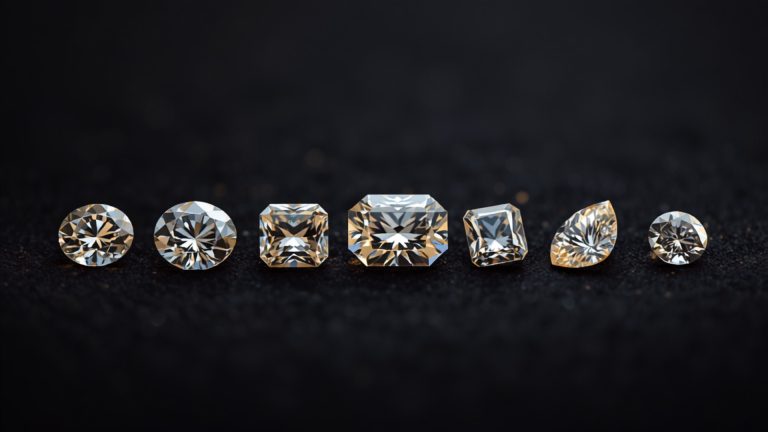
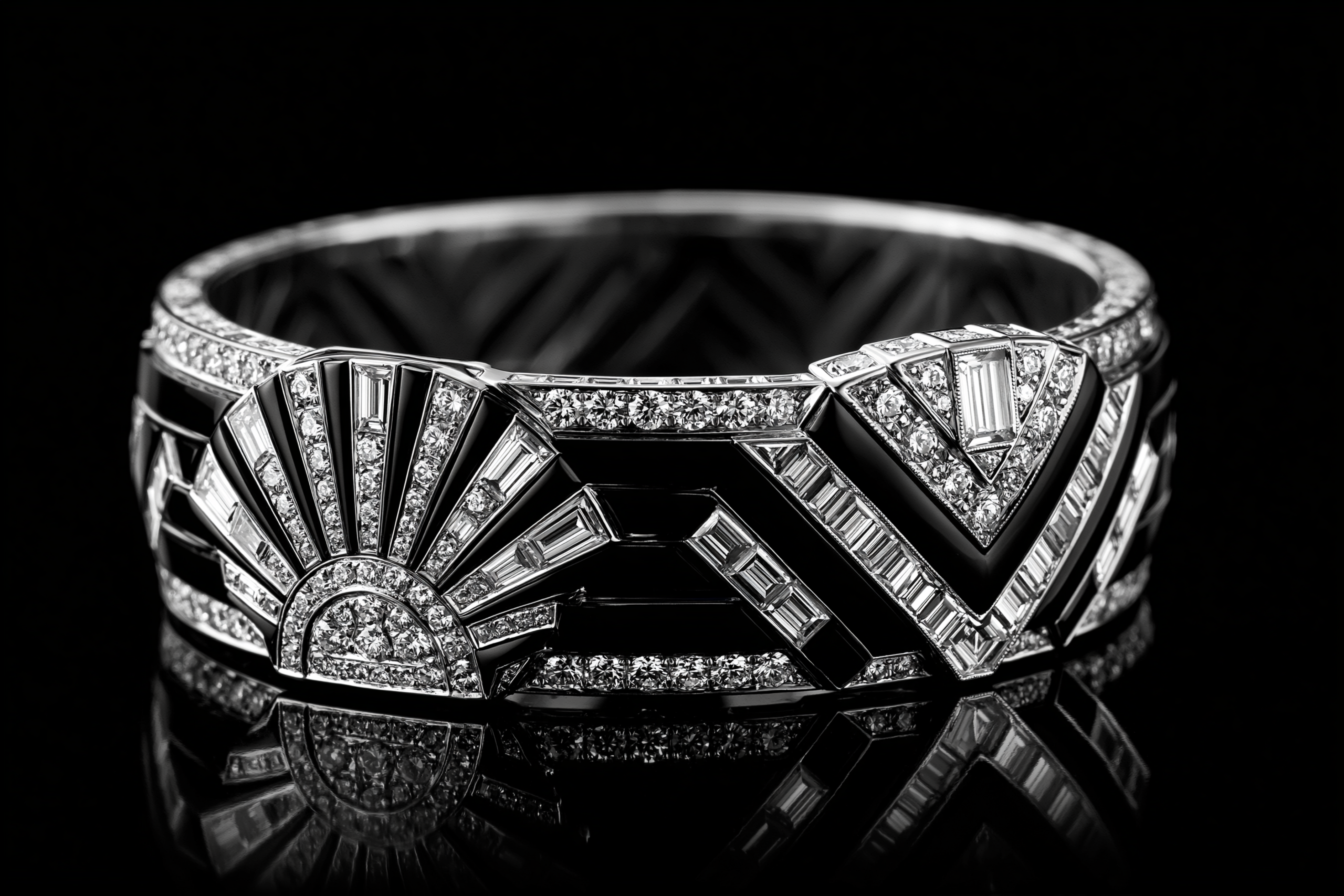
Deco was the century looking forward. Its vocabulary was geometry: straight lines, chevrons and zigzags, sunbursts and fans, stepped “skyscraper” profiles borrowed from the new city skyline. The 1922 discovery of Tutankhamun’s tomb added a wave of Egyptian motifs. Diamonds were cut into crisp baguettes, triangles and trapezoids that tiled together like tilework, most often set in bright, strong platinum so the metal all but vanished.
Silver for the sidewalk
Not everyone could buy platinum and diamonds — but everyone wanted the look. So the Jazz Age geometry poured into silver, often set with marcasite, whose tiny faceted sparkle mimicked diamond pavé at a fraction of the cost. For the first time, a shopgirl and a socialite could wear the same silhouette. Deco became the rare luxury style that was also, quietly, democratic.
Why it still looks modern
A hundred years on, Deco silver hasn’t dated, and the reason is simple: pure geometry never does. A stepped panel, a sunburst, a clean chevron reads as crisply now as it did in 1925. That is exactly why we love these pieces at AURELÉ — they carry a whole electric decade in a shape you could wear tomorrow.
Sources: Wikipedia and the Musée des Arts Décoratifs, on the 1925 Paris Exposition and the origin of the term “Art Deco”; Greenwich St. Jewelers and Filigree Jewelers, on Art Deco jewellery geometry, platinum and cuts.
Keep exploring: why old diamond cuts glow, the emerald cut and its kin, and another silver story — the soul of the Southwest.