The Golden West
Sun-baked stories from the American Southwest — turquoise, silver, and the golden age of the open road.
A Second World at AURELÉ
Wild at Heart
Where the Diamond line is quiet and precise, The West is warm, worn, and full of story. Vintage silver and turquoise, and the desert that made them.
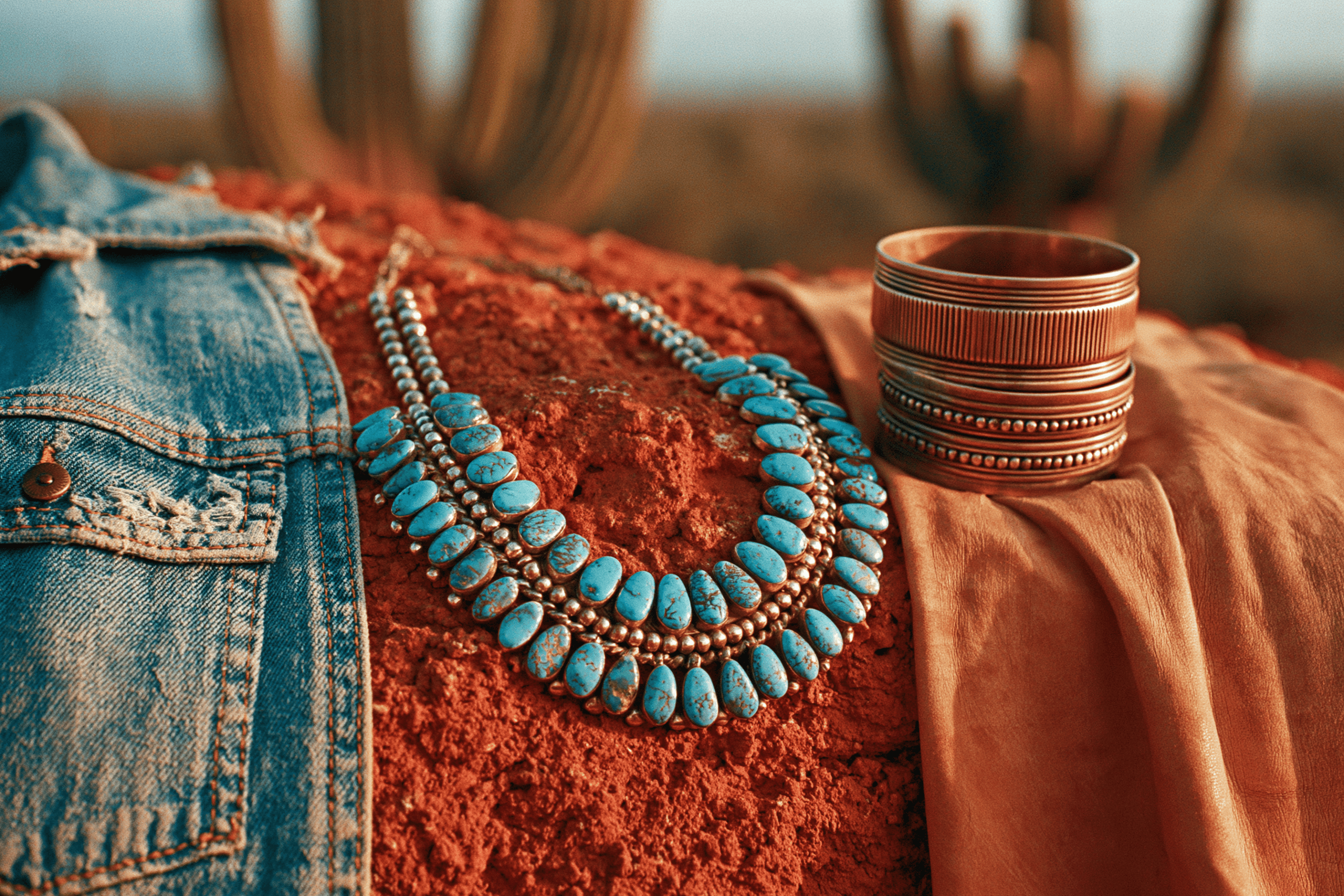
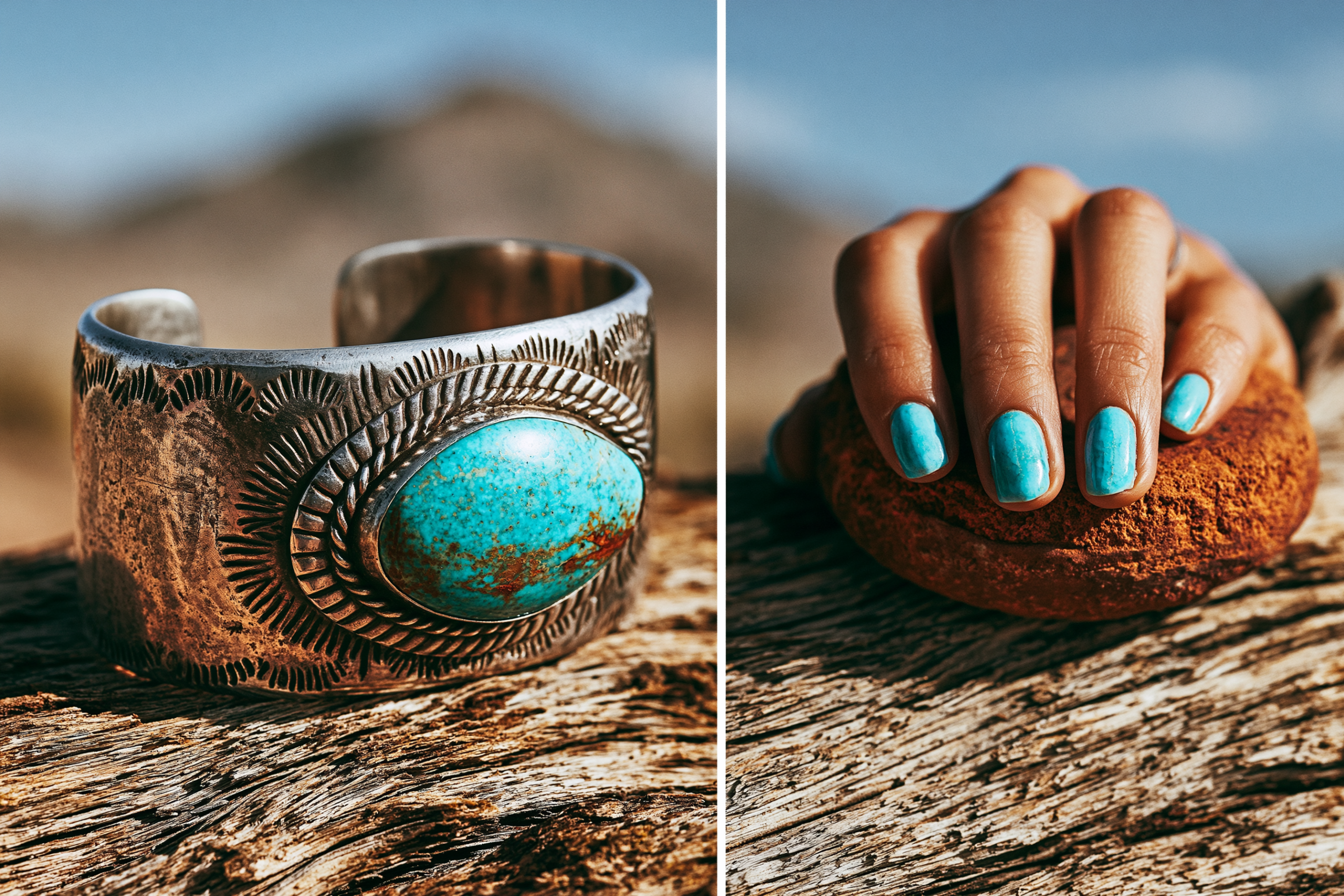
Turquoise & Silver
Soul of the Southwest
For the peoples of the Southwest, turquoise was never just a stone — it was sky caught in the earth, a piece of the heavens to carry against the skin. Set into hand-stamped silver by Navajo and Zuni hands, it became the desert’s own signature: bold, warm, and unmistakably alive.
Every cuff and every stone is a little different, and that is the point — this is jewellery with weather in it, made to be worn, handled, and handed down.
Some pieces you wear. Others you inherit — worn smooth by the hands that came before.
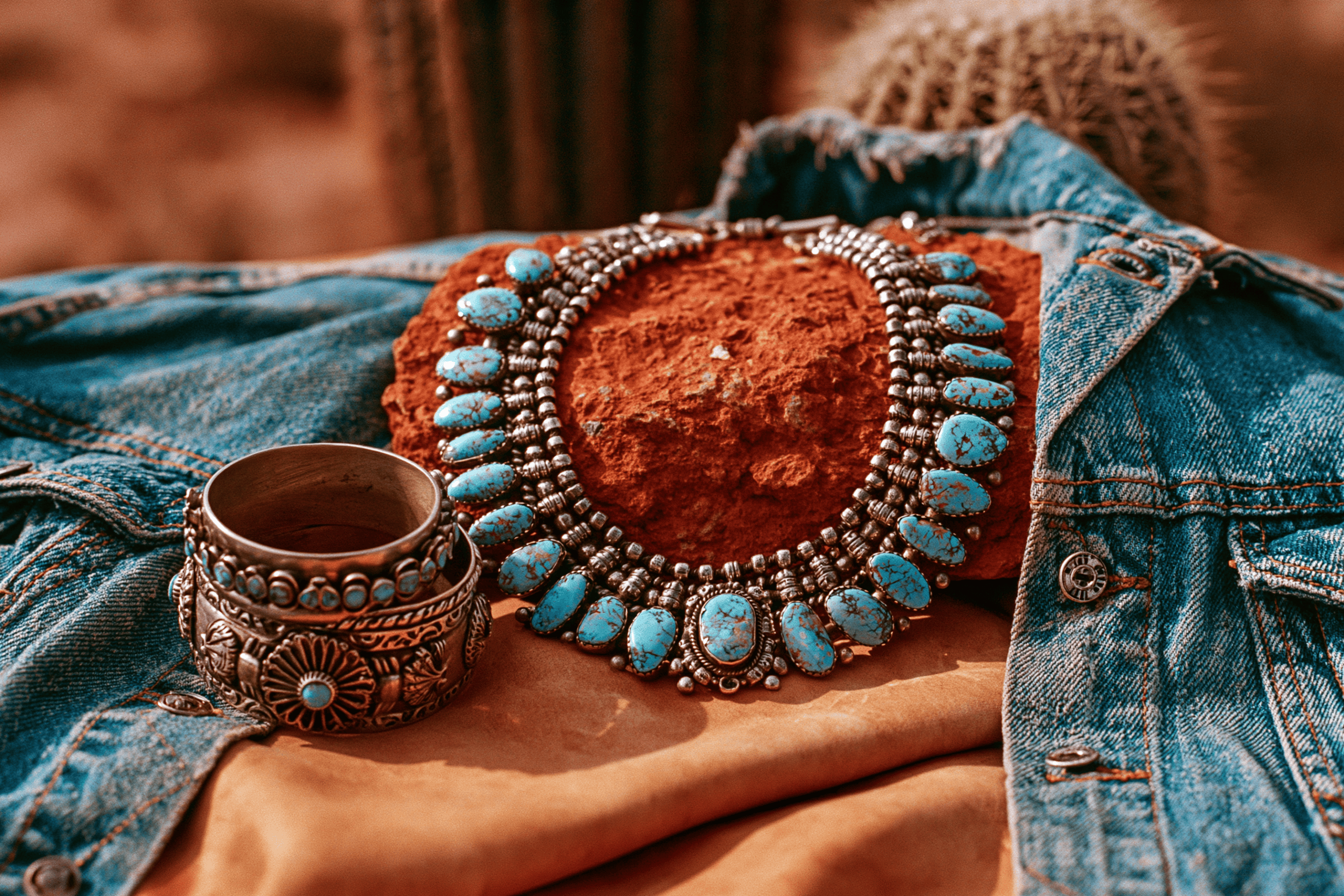
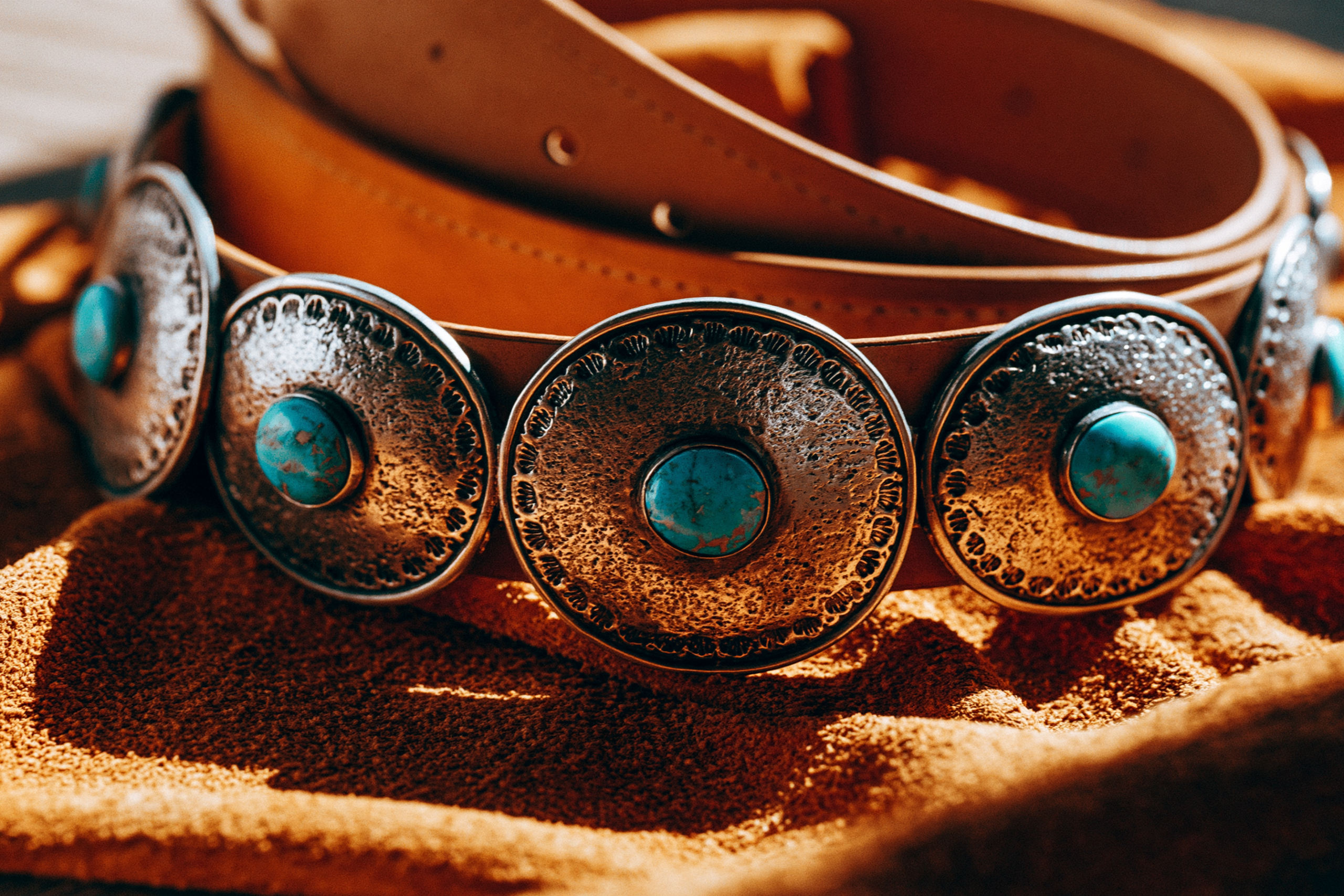
The Squash Blossom
Crown of the Desert
The squash blossom necklace is the crown jewel of Southwestern silver — a sweeping arc of beads and blossoms curving toward the naja, the crescent at its heart. Its shapes travelled a long road, from Moorish Spain to Mexican silver to Navajo silversmiths, who made it wholly their own.
To wear one is to wear a piece of that journey: a bold, ceremonial thing that has crowned the desert for more than a century.
And then there was the summer the whole country wanted a piece of it.
1975
The Summer Everyone Wore Turquoise
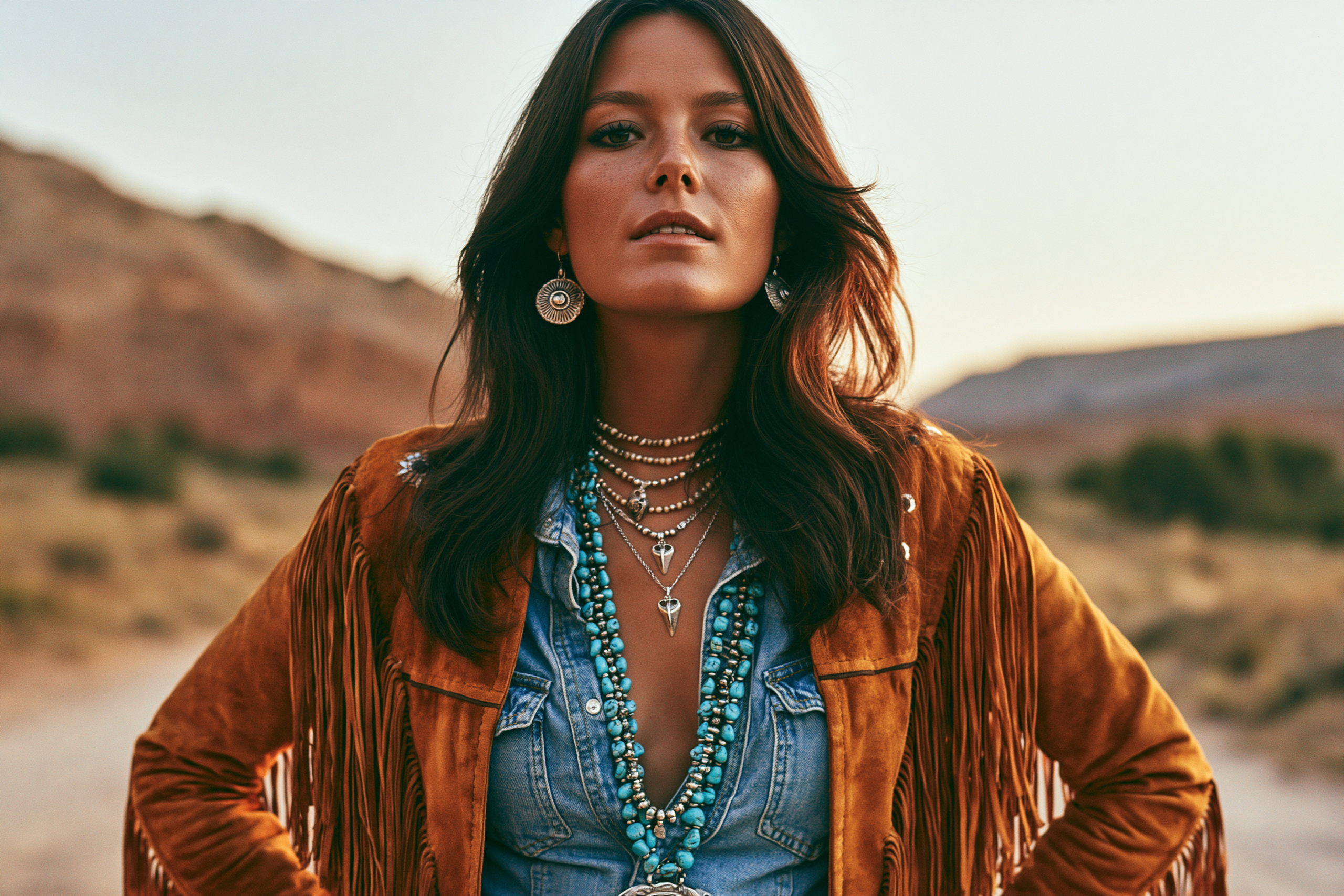
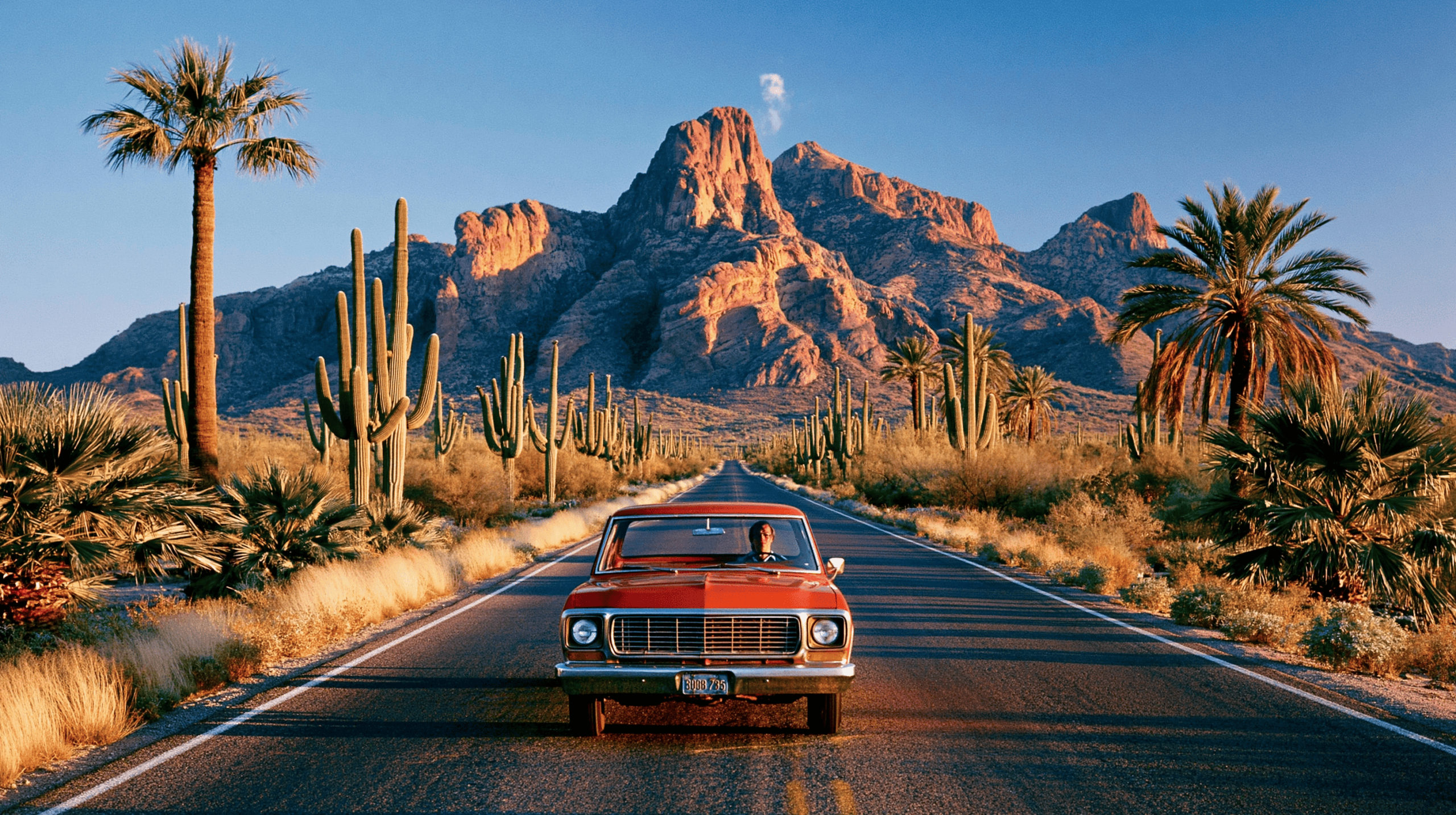
For one sun-baked stretch of the 1970s, turquoise wasn’t regional — it was everywhere. Denim, fringe, and stacks of silver became the uniform of a decade chasing something freer and more rooted, and the desert’s oldest stone became its most modern statement.
That golden-age glow is exactly the spirit AURELÉ chases in The West: not costume, but memory — the warmth of a photograph you are sure you have seen before.