Understanding the 4Cs: How to Read a Diamond
If you’ve started shopping for a diamond, you’ve already run into the “4Cs” — cut, color, clarity and carat. They sound like a science exam, but they really answer one simple question: how much beauty are you getting for your money?
Every diamond is graded on these four qualities, and together they explain why two stones of the same size can differ wildly in price and presence. Here’s what each one actually means — and where to spend, where to save.
1. Cut — the one that makes it sparkle
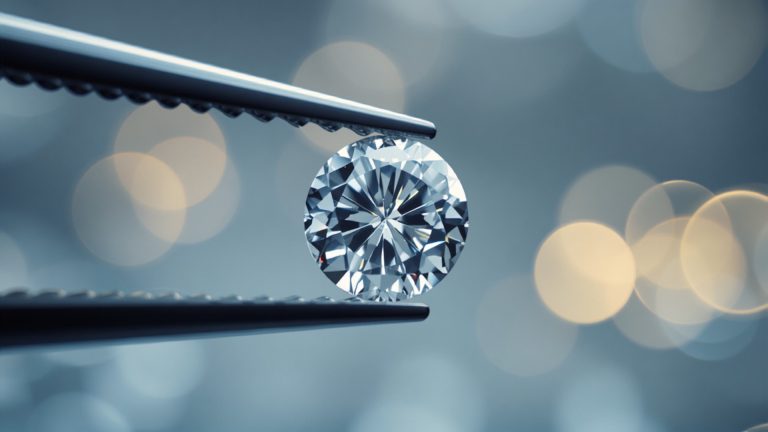
Cut is the most important C, and it’s the one people misunderstand most. It doesn’t refer to the diamond’s shape (round, oval, and so on). It refers to how well the stone’s facets are proportioned and polished to handle light.
A well-cut diamond catches light and throws it straight back at you — that flash and fire is what makes a diamond look alive. A poorly cut stone leaks light through the bottom and looks dull and glassy, even if it scores perfectly on the other three Cs.
2. Color — less is more
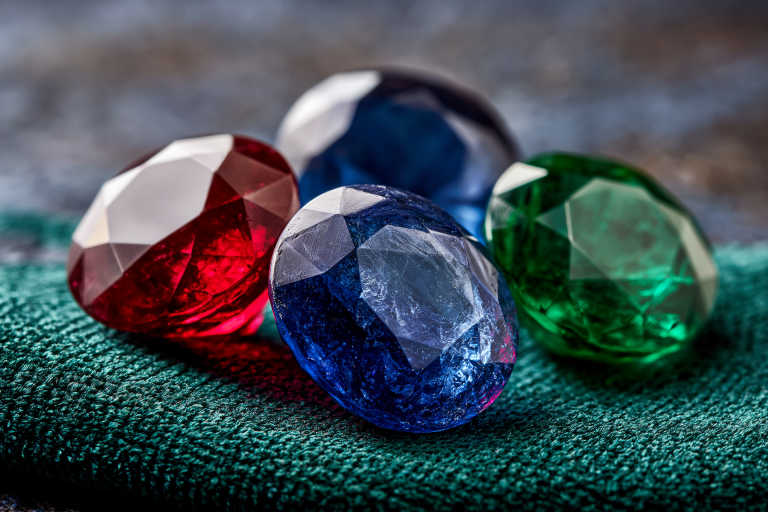
Diamond color is graded on a scale from D (completely colorless) down to Z (a noticeable warm tint). Counter-intuitively, the “best” diamonds have no color at all, which is why D, E and F stones sit at the top of the scale.
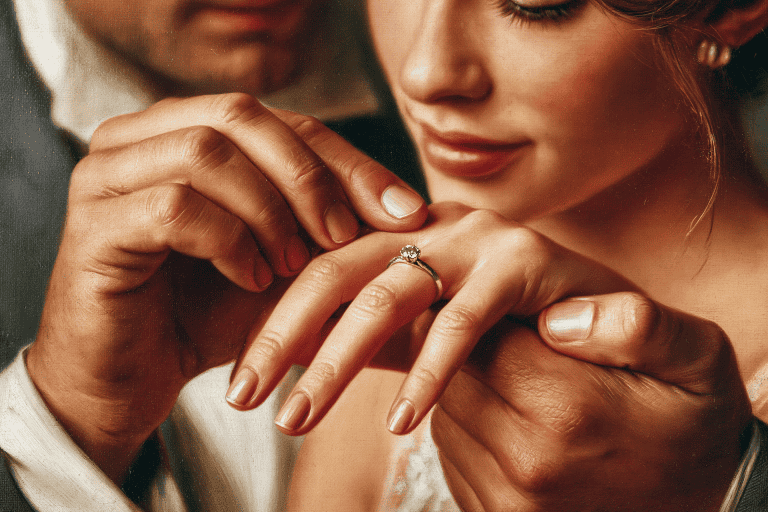
Here’s the money-saving secret: the difference between a D and a G is almost impossible to see once a diamond is set in a ring — especially face-up, in normal light. Most people land in the G–H range and get a stone that reads as white to the naked eye for a fraction of the price of a D.
3. Clarity — what’s happening inside
Nearly every diamond forms with tiny internal characteristics called inclusions. Clarity grades how few and how visible these are, on a scale that runs from Flawless (FL) through VVS, VS and SI, down to Included (I).
The key phrase to know is “eye-clean” — a diamond with no inclusions visible to the naked eye. You usually don’t need flawless. A VS or a well-chosen SI1 stone is typically eye-clean and looks identical to a flawless one without a jeweler’s loupe.
4. Carat — size, not weight you can see
Carat is simply the diamond’s weight (one carat = 0.2 grams), and it’s the C people fixate on first. But because price jumps at the round numbers — 1.0ct, 1.5ct, 2.0ct — you can save meaningfully by going just under.
A 0.9ct stone looks virtually identical to a full carat on the finger, but often costs noticeably less. These “shy” weights are one of the smartest moves in diamond buying.
Putting the 4Cs together
The art of buying well is balance, not maxing out every grade. A great everyday strategy looks like this: prioritize cut, choose a near-colorless G–H, pick an eye-clean VS–SI1, and consider a shy carat weight. You get a diamond that looks like a million dollars and leaves room in the budget for a setting you love.
And with a lab-grown diamond, those same 4Cs apply exactly — graded by the same independent labs, on the same scales — which means you can often afford a higher grade across the board for the same spend.
SHARE