Ruby: July’s Birthstone, the King of Gems
Every month has a stone; July has a king. Ruby — the July birthstone — was named ratnaraj in ancient Sanskrit: “the king of precious stones.” Four thousand years on, no gem has seriously contested the crown.
A flame that never goes out
In old Burma, warriors carried rubies into battle, believing the stones made them invincible. In India, texts described the ruby’s glow as an inner flame that could not be put out — a fire said to shine through clothing, even through water. Medieval Europeans prized rubies as guarantees of health, wisdom and success in love.
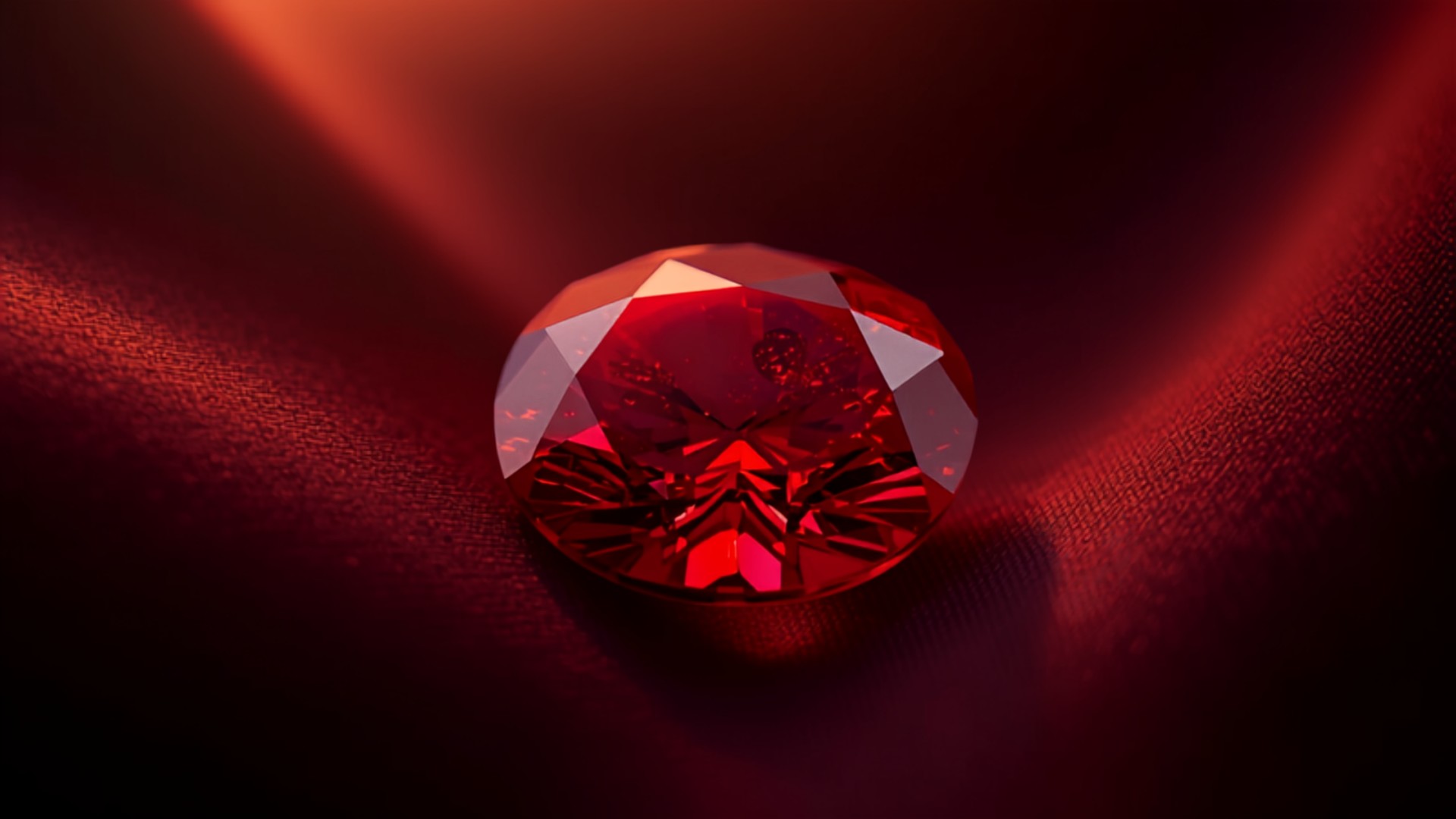
Superstition, of course. But stand a fine ruby in low light and you understand where it all came from: chromium — the element that gives ruby its red — also makes the stone fluoresce, so it really does seem to burn from within.
What makes a ruby a ruby
Mineralogically, ruby is corundum, the same species as sapphire. Corundum in any other colour — blue, pink, yellow, green — is called sapphire; only red earns a name of its own. (We compare all three of the Big Three in a guide of their own.)
At 9 on the Mohs scale, ruby is the hardest gem after diamond — a stone genuinely built for daily wear. The most coveted shade is “pigeon’s blood”: a vivid, pure red with the faintest whisper of blue, historically from the Mogok Valley of Burma. Today the great new source is Mozambique.
The most expensive coloured gem on Earth
Carat for carat, fine ruby outprices nearly everything — including most diamonds. In 2015 the Sunrise Ruby, a 25.59-carat Burmese pigeon’s blood, sold for $30.4 million. In June 2023 the Estrela de Fura, a 55.22-carat Mozambican stone, brought $34.8 million at Sotheby’s — a record not just for rubies, but for any coloured gemstone ever sold at auction.
July’s flame
Ruby has been fixed as the July birthstone since jewelers standardized the modern list in 1912, though its link to high summer is far older. It is a fitting match: no stone reads more like July — heat, saturation, a light that seems to come from inside. (How the twelve stones were chosen is a story of its own.)
Choosing a ruby today
Three practical notes. First, colour rules everything: look for a vivid, evenly saturated red, neither too dark nor too pink. Second, almost every ruby on the market is heat-treated — an accepted, permanent practice; untreated stones with laboratory certificates command a serious premium. Third, lab-grown rubies are real corundum and have existed since 1902 — the very first chapter in the story of grown gems — at a fraction of the mined price.
For a July birthday, a ruby needs no occasion beyond the calendar: a single stone on a chain, a pair of studs, a signet with a flat red at its centre. The king of gems, worn quietly.