Twelve Stones, Twelve Months: The Story of Birthstones
Your birthstone is older than the calendar it hangs on. It began on a priest’s breastplate, travelled through the zodiac, and was pinned into its modern form in a single meeting in Kansas City in 1912.
A breastplate of twelve gems
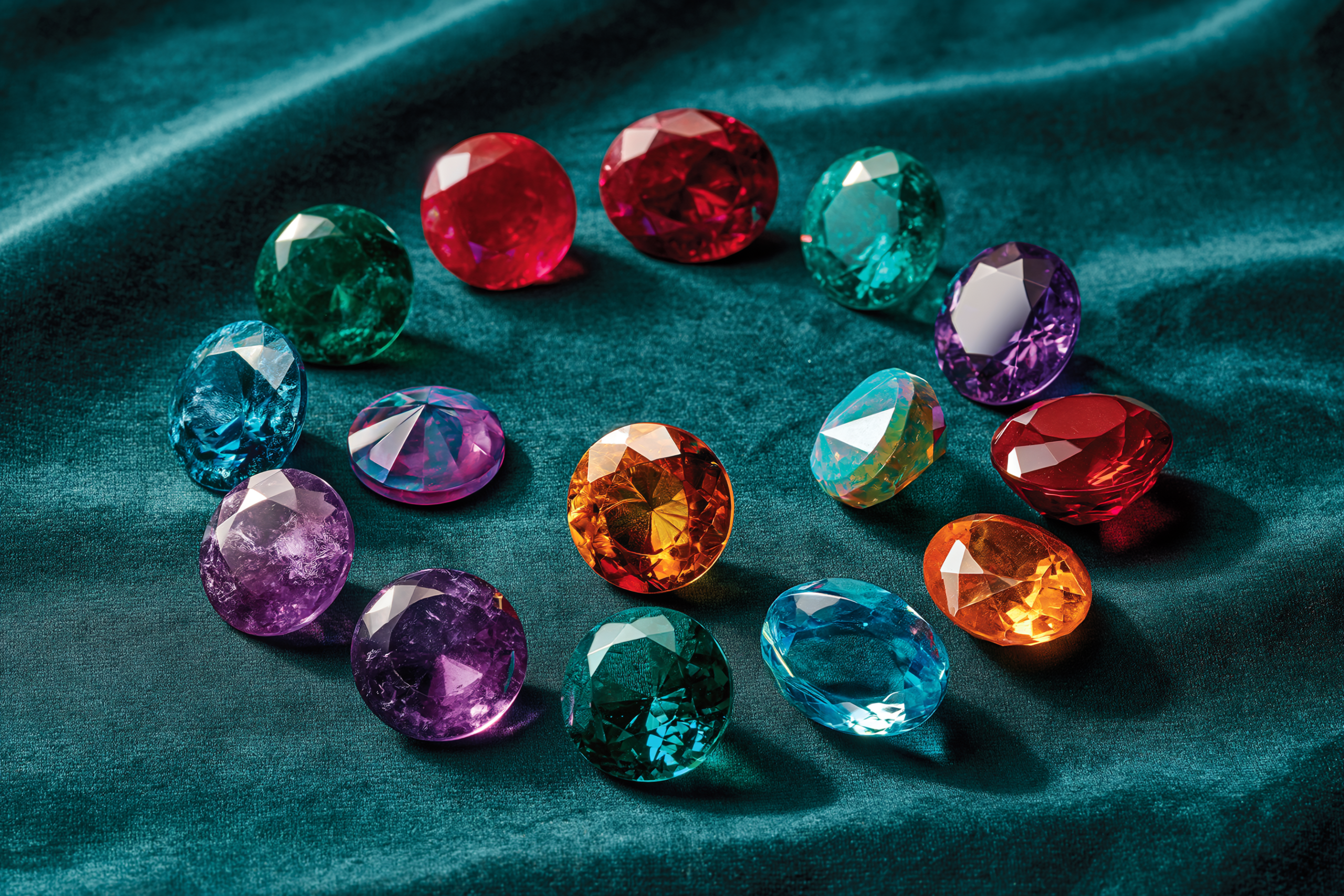
The oldest thread leads back to the breastplate of Aaron, described in the Book of Exodus: a ceremonial garment set with twelve gemstones, each standing for one of the twelve tribes of Israel. In the first century, the historian Josephus noticed a tidy symmetry — twelve stones, twelve months of the year, twelve signs of the zodiac — and proposed they were all connected. For a long time, people owned all twelve and wore whichever matched the season, like a rotating wardrobe of stones.
One stone, one month
The idea of owning only your stone — the one for your birth month — is more recent, taking hold in Europe over the last few centuries. But the lists were a mess: they varied by country, by trader, by translation of ancient names no one could quite pin to a modern mineral.
The list we use today
Order arrived in 1912, when the American National Association of Jewelers (today Jewelers of America) met in Kansas City and adopted an official list — leaning toward clear, transparent gems that were easy to sell and set. That list is essentially the one on jewellery-shop charts today, with a few later additions: alexandrite, citrine and pink tourmaline in 1952, tanzanite in 2002, and spinel joining August in 2016.
So a birthstone is really three stories at once — a sacred relic, an astrological pattern, and a twentieth-century industry standard. What survives all of it is the simplest part: the pleasure of a stone that is, in some small way, yours.
Sources: Wikipedia and the International Gem Society, on the history of birthstones; Jewelers of America, on the 1912 standardized list and later additions (1952, 2002, 2016); Book of Exodus and Josephus, on Aaron’s breastplate.
Go deeper: ruby, sapphire and emerald — the Big Three, and the Victorian language of flowers. And July’s stone, the king of them all, has a story of its own.