The Serpent Ring: Jewellery’s Oldest Love Story
Give someone a snake, and for most of history you were saying I love you, forever. Feared in almost every other setting, the serpent became jewellery’s most enduring emblem of eternity — coiled on the crown of a pharaoh, and, one day, on the finger of a young queen in love.
The snake on the crown
In ancient Egypt the cobra was royalty. The uraeus — a rearing cobra — sat at the brow of the pharaoh’s crown as a sign of divine authority and protection, ready to strike at any enemy of the king. Cleopatra herself was bound up with serpent imagery, and coiled cuffs and armbands marked their wearers as powerful and protected.
A circle with no end
Then there was the ouroboros — the snake devouring its own tail, forming a perfect circle. One of the earliest known versions appears in a funerary text from the tomb of Tutankhamun, more than three thousand years ago. Its meaning has never really changed: a loop with no beginning and no end, standing for eternity and the endless renewal of life.
Rome’s coiled talismans
Roman women wore snakes everywhere — rings and bracelets that spiralled up the arm, worn as much for luck and protection as for beauty. The serpent shed its skin and seemed reborn, and so it came to promise renewal and long life to whoever wore it.
Victoria’s serpent ring
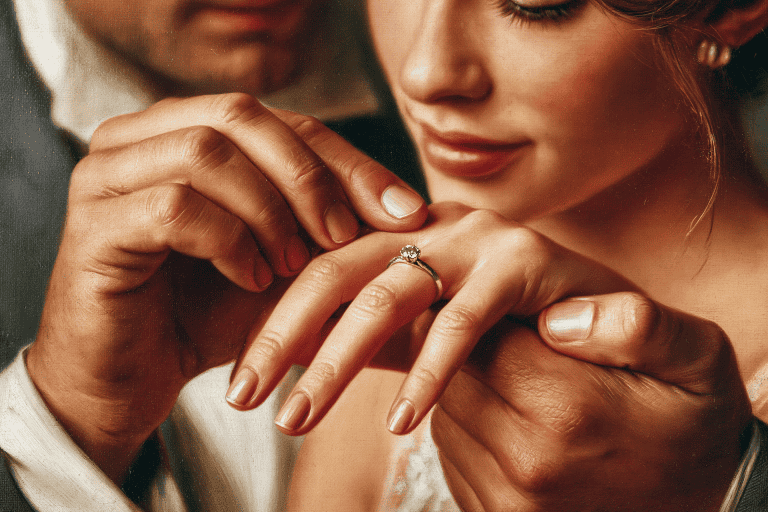
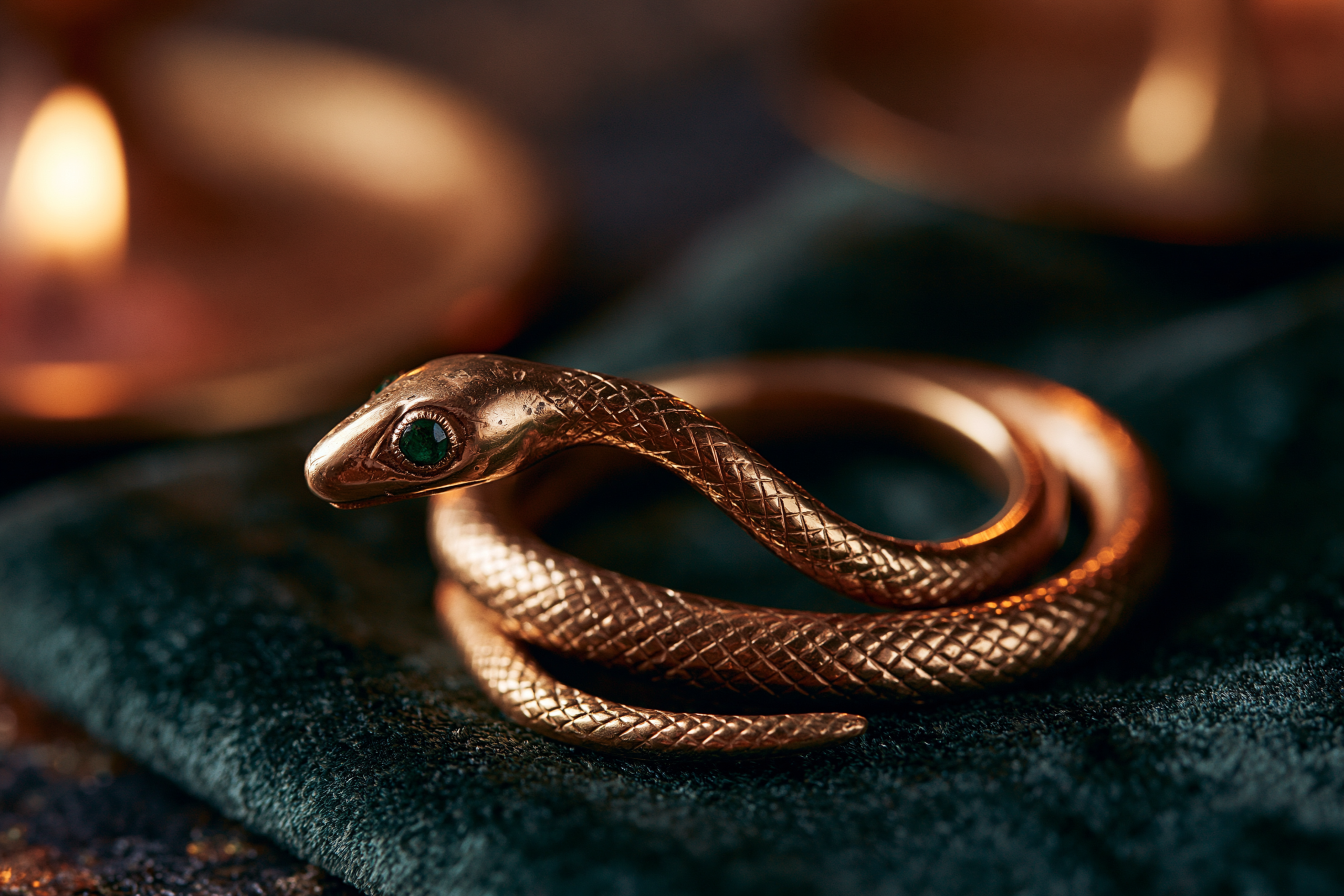
The motif’s great romantic moment came in 1840, when Prince Albert proposed to Queen Victoria with an engagement ring shaped as a snake. Victoria adored it, and all of Europe followed: a snake-jewellery craze swept the century, the serpent now firmly recast as a symbol of love that never ends.
That is the quiet magic of the serpent in jewellery. The same creature the world learned to fear became the shape we reach for when we want to say the one thing hardest to say — this will last.
Sources: Berganza and Kalmar Antiques, on the history of serpent jewellery; Erica Weiner, on snakes in jewellery; general references on the Egyptian uraeus, the ouroboros in Tutankhamun’s tomb, and Queen Victoria’s 1840 serpent ring.
Continue the story: the Victorians’ language of flowers, and how the diamond became a promise.